
Ceylon Sapphire: The Complete Guide to Sri Lanka's Finest Sapphires
An in-depth guide to Sri Lankan sapphire origin, colors, treatments, inclusions, laboratory reports, value and confident buying.
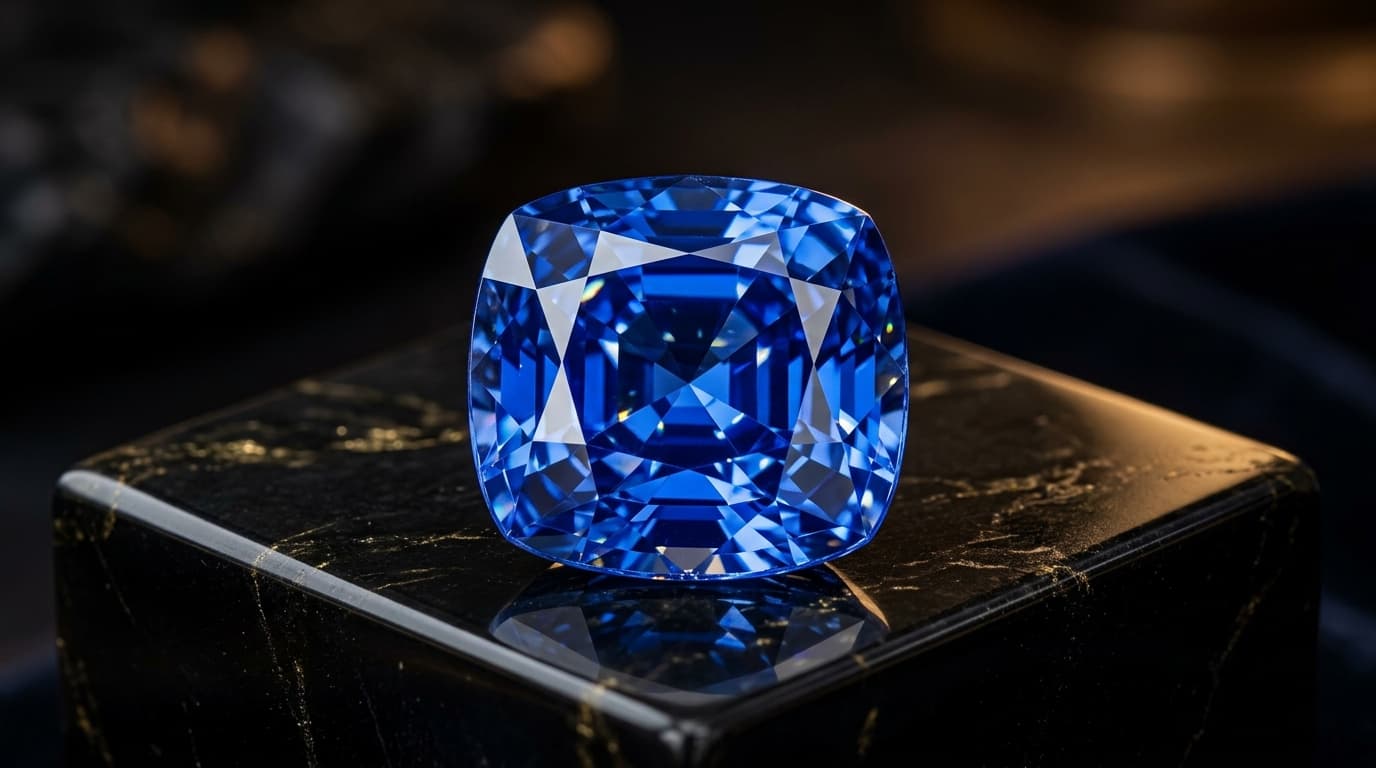
Few gemstones are as closely connected to a place as the Ceylon sapphire is to Sri Lanka.
For centuries, this island in the Indian Ocean has been known for remarkable gemstones, with sapphire at the heart of that reputation. Today, the term Ceylon sapphire continues to carry significance among collectors, jewelers, gemstone enthusiasts, and buyers around the world.
Yet the name alone tells only part of the story.
A sapphire should never be judged simply because it is described as Ceylon, nor should terms such as Royal Blue, Cornflower Blue, natural, heated, unheated, or certified be accepted without understanding what they actually mean.
Every natural sapphire is individual.
Its beauty and desirability depend on a combination of characteristics including color, transparency, clarity, inclusions, cut, carat weight, treatment history, geographic origin, and—particularly for important gemstones—the quality of the independent laboratory documentation supporting those claims.
This guide explores the complete journey of Ceylon sapphire: from Sri Lanka's geological landscape to the polished gemstone seen by a buyer, from natural inclusions and heat treatment to laboratory origin determination and responsible online purchasing.
“Observe carefully. Document accurately. Disclose transparently.”
What Is a Ceylon Sapphire?
A Ceylon sapphire is a natural sapphire associated with geographic origin in Sri Lanka, the island historically known internationally as Ceylon.
The word Ceylon does not describe one particular shade of blue. Instead, it refers to geographic origin. Sri Lanka produces sapphires in a broad range of colors including blue, pink, yellow, violet, green, colorless, parti-colored material, and the celebrated pink-orange range associated with Padparadscha sapphire.
That distinction is important: Ceylon describes origin. Color terminology describes appearance. Those two ideas should never be confused.
Why Is It Called "Ceylon"?
Sri Lanka was internationally known as Ceylon until the country adopted the name Sri Lanka in 1972. The historical name remained deeply established within the international gemstone trade, which is why the expression Ceylon sapphire is still widely used today.
Mineralogically, sapphire is the gem variety of corundum, a crystalline form of aluminium oxide. Ceylon sapphire is therefore not a separate mineral species—it is sapphire associated with Sri Lankan origin.
Ceylon Sapphire vs Sri Lankan Sapphire
In modern gemstone terminology, Ceylon sapphire and Sri Lankan sapphire are commonly used to describe sapphires associated with the same country.
For a buyer, however, terminology should never replace evidence. If Sri Lankan origin is important to a purchase, the stronger question is not simply whether a seller uses the word Ceylon. The important question is: What independent evidence supports that origin claim?
For significant gemstones, an independent gemological laboratory may provide an origin opinion based on microscopic examination, spectroscopy, trace-element chemistry, and comparison with documented reference material.
Does Ceylon Mean a Particular Blue Color?
No. Blue sapphire is internationally famous, but Sri Lanka produces sapphire across a remarkably broad color spectrum. Even within blue sapphire, two stones of similar weight may differ visibly in:
- Hue, Tone & Saturation
- Transparency & Clarity
- Color Zoning
- Inclusions & Internal Features
- Cut Quality & Brilliance
- Treatment History
That is why a gemstone should never be evaluated from its origin name—or its color name—alone.
How Ceylon Sapphires Form
To understand a Ceylon sapphire, we need to look far beyond the finished gemstone. Its story begins deep within the geological history of Sri Lanka.
Sapphire belongs to the mineral species corundum. Trace elements incorporated during crystal formation contribute to the different colors associated with sapphire, including the blue hues for which Sri Lanka is especially famous.
An Ancient Metamorphic Landscape
Much of Sri Lanka is underlain by extremely old crystalline rocks that experienced intense geological transformation over immense periods of time. Research into Sri Lankan sapphire geology links many sapphires to ancient metamorphic environments where high temperature, pressure, and chemical processes contributed to crystal formation.
Over geological time, weathering gradually broke down surrounding rocks while durable gem minerals survived. Because sapphire has exceptional hardness—9 on the Mohs scale—it resists weathering better than many surrounding minerals.
From Ancient Rock to Alluvial Deposits
Many commercially important Sri Lankan gemstones are recovered not directly from their original host rock but from secondary alluvial deposits. Rain, rivers, gravity, and erosion transported resistant gem minerals into valleys and gravel layers where they became naturally concentrated.
In Sri Lankan gem mining, gem-bearing gravel is commonly referred to as illam. This means the location where a sapphire is mined is not necessarily the exact place where its crystal originally formed. That distinction is one reason geographic origin is scientifically more complex than simply identifying a river or mining pit.
Ratnapura and Elahera
Ratnapura, often called the City of Gems, is one of Sri Lanka's best-known gemstone-producing regions. The surrounding districts have yielded sapphire, spinel, chrysoberyl, zircon, garnet, tourmaline, and many other natural gemstones from alluvial deposits.
Another important gem-producing area is Elahera in central Sri Lanka, which has also produced diverse sapphire and corundum material. These regions contribute to Sri Lanka's international reputation as one of the world's historic gemstone sources.

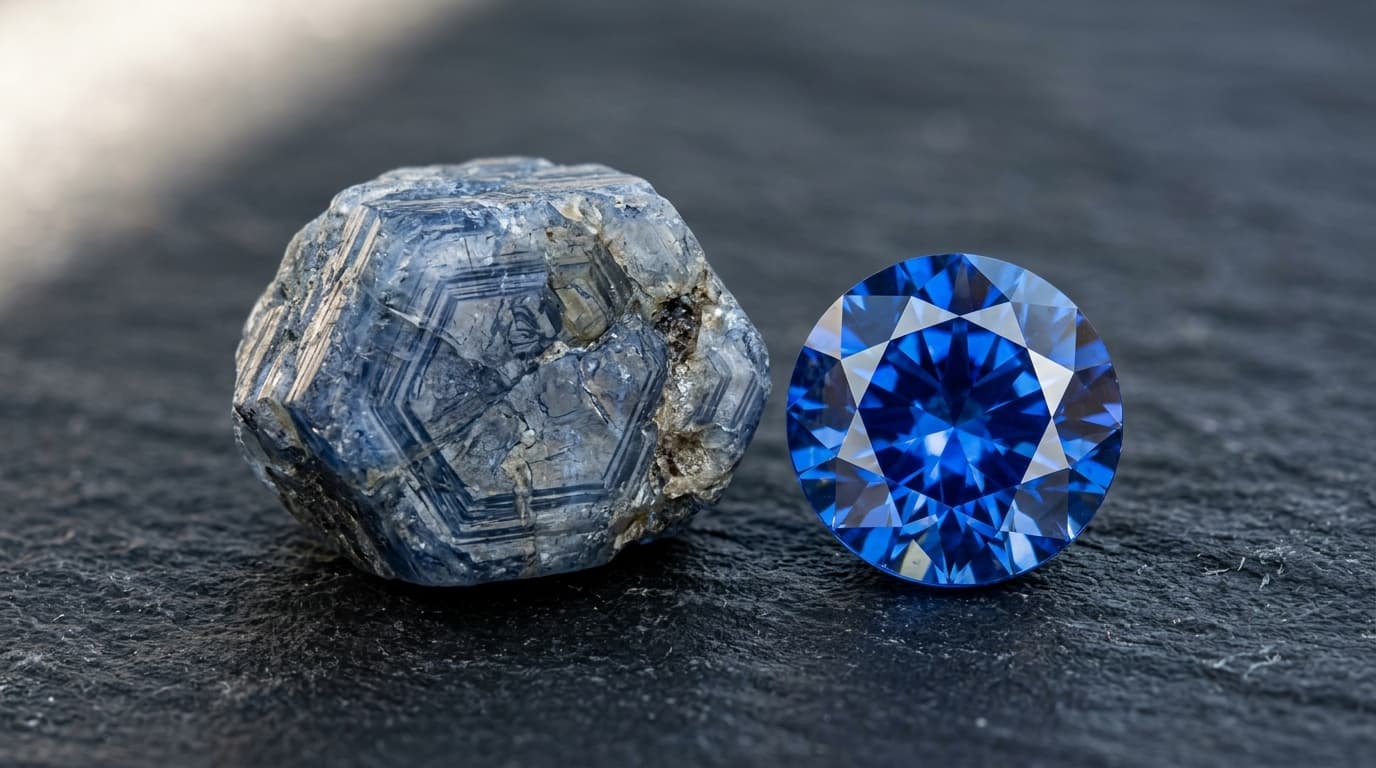
From Rough Crystal to Finished Gem
Once recovered, rough sapphire rarely resembles the polished gemstone eventually seen in jewelry or collectors' hands. A cutter must consider:
- Crystal orientation & pleochroism
- Color zoning & concentration
- Transparency & clarity
- Inclusions & fracture locations
- Rough shape & finished weight
- Proportions & brilliance
The goal is not simply to retain the greatest possible carat weight. The goal is to reveal the strongest possible balance between beauty, color, brilliance, and usable size. Nature creates the crystal. Craftsmanship reveals its potential.
Sri Lanka's Sapphire Heritage
Sri Lanka's gemstone story is not a modern marketing invention. Historical records and long-standing international trade references demonstrate that the island has been recognized for gemstones for many centuries. Its location in the Indian Ocean placed it along important maritime trade routes connecting Asia, the Middle East, and Europe.
An Island Known for Gems
Different civilizations knew Sri Lanka by different names throughout history, but its association with precious stones remained remarkably consistent. Ancient chronicles, historical travel accounts, and traditional gem trading all reflect the importance of gemstones to the island's cultural and commercial identity.
Not every historical gemstone story should be treated as proven fact. A responsible educational guide must distinguish between documented history and later legend. Sri Lanka's genuine gem heritage is already extraordinary without exaggeration.
Marco Polo and Ceylon
One of the most frequently cited historical references comes from Venetian traveler Marco Polo, whose writings described Ceylon as an important source of valuable gemstones during the late thirteenth century. Such references demonstrate that Sri Lanka's gemstone reputation had travelled far beyond the island long before the modern gemstone industry existed.
Traditional Trade Meets Modern Gemology
Generations of Sri Lankan miners, traders, cutters, and gemstone professionals have developed remarkable practical experience handling natural gemstones. Modern gemology has added another layer of understanding through advanced microscopy, spectroscopy, chemical analysis, and laboratory testing.
The strongest approach is not tradition alone. Nor is it technology alone. It is practical experience supported by scientific evidence.
What Makes a Ceylon Sapphire Special?
The name attached to a gemstone does not determine its beauty. The individual stone does. Two sapphires from Sri Lanka can differ dramatically in appearance and desirability because of differences in color, transparency, clarity, cut, treatment, and overall visual character.
Color
Color is one of the most influential characteristics of sapphire beauty. Rather than simply asking whether a stone is blue, gemologists evaluate: Hue (the basic color), Tone (lightness or darkness), Saturation (intensity of color), and Distribution (evenness throughout the gem).
Transparency and Clarity
Transparency describes how freely light travels through the stone. Clarity refers to internal features known as inclusions. Natural sapphires frequently contain internal features created during geological formation. An inclusion is not automatically a defect; its significance depends on size, location, visibility, and effect on transparency and durability.
Surface Condition
A polished sapphire should be examined for scratches, abrasions, chips, cavities, worn facet edges, and polish quality, which contribute both to beauty and long-term durability.
Cut, Luster & Brilliance
Colored gemstones are cut differently from diamonds to balance natural rough crystal contours. Luster describes surface reflection, while brilliance refers to internal light return. Fine polishing and thoughtful proportions create memorable visual life.
A Practical MIHILAK GEMS Perspective
At MIHILAK GEMS, our evaluation philosophy begins with one important principle: Never identify a gemstone by color alone.
Many gemstone species occur in similar colors. Experienced handling begins with tactile observation and optical inspection, but conclusive identification, treatment status, and origin always rely on rigorous gemological documentation.
The Colors of Ceylon Sapphire
Sri Lanka is especially remarkable because sapphire occurs across a broad natural spectrum.
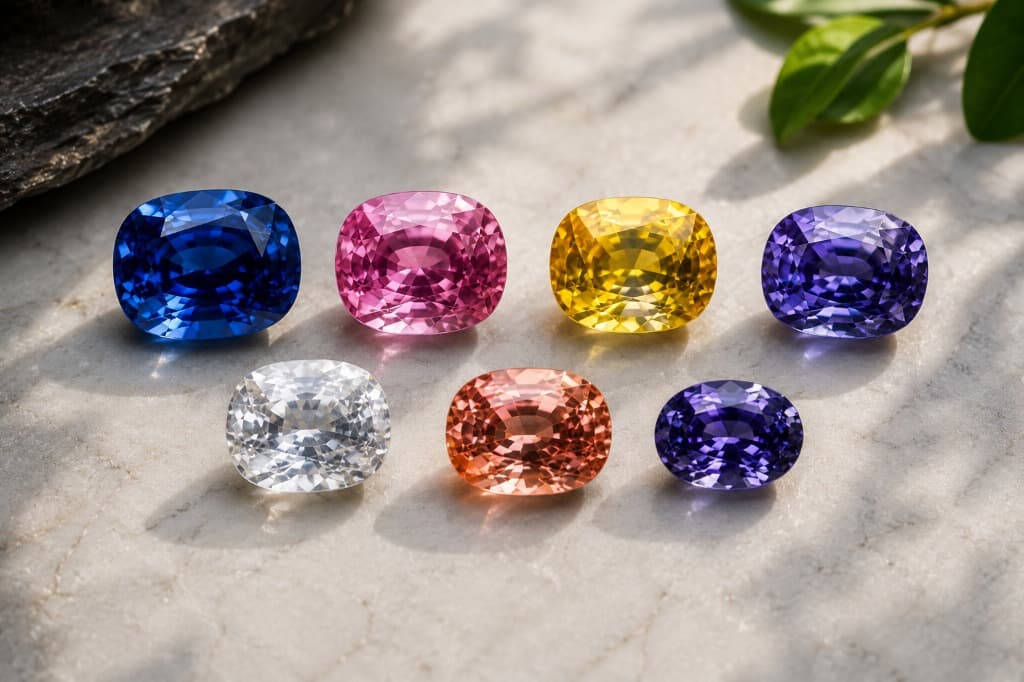
Blue Sapphire
Ranging from soft velvety cornflower to deeply saturated royal blues.
Pink Sapphire
From delicate baby pink blossoms to vivid magenta hues.
Yellow Sapphire
Celebrated golden pushparaga displaying remarkable brilliance and clarity.
Padparadscha Sapphire
The rarest pink-orange lotus flower hue with delicate sunset balance.
Violet & Purple Sapphire
Rich royal purple and lavender tones displaying vibrant color play.
White Sapphire
Colorless pure corundum offering natural diamond-like scintillation.
Ceylon Blue Sapphire
Blue sapphire deserves special attention because it remains the most sought-after sapphire category for many collectors and buyers.
Hue, Tone and Saturation
A beautiful sapphire combines an attractive blue hue, balanced tone, vivid saturation, excellent transparency, and lively brilliance. A stone that is too dark can lose brightness, while a stone that is too light may appear less saturated.
Color Zoning & Why Lighting Matters
Natural sapphire crystals may contain areas of stronger and weaker color known as color zoning. A skilled cutter orients the rough strategically to optimize face-up beauty.
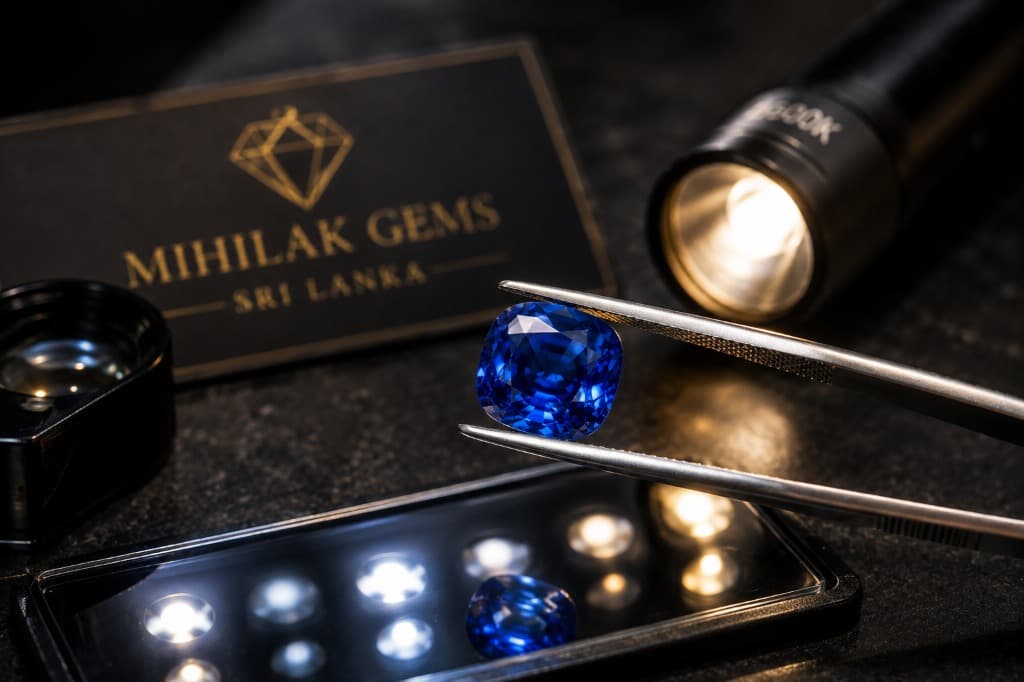
A sapphire can look noticeably different under natural daylight, warm indoor lighting, LED illumination, and studio lighting. For online buyers, photographs under several lighting conditions and high-quality 4K video provide a far more realistic understanding than a single edited image.
Royal Blue vs Cornflower Blue
These are among the most famous sapphire trade terms—and among the most misunderstood.
Royal Blue
Generally refers within the trade to a rich, strongly saturated, medium-dark blue appearance. It is not a universal guarantee of superior quality; the individual stone's brightness and clarity matter equally.
Cornflower Blue
Commonly associated with a lively, pastel-to-medium velvety blue that radiates exceptional brightness in diverse lighting conditions.
Natural Inclusions
Look inside a natural sapphire and you discover a remarkable geological world. Gemologists call internal characteristics inclusions. These features preserve vital clues about the gemstone's geological genesis.
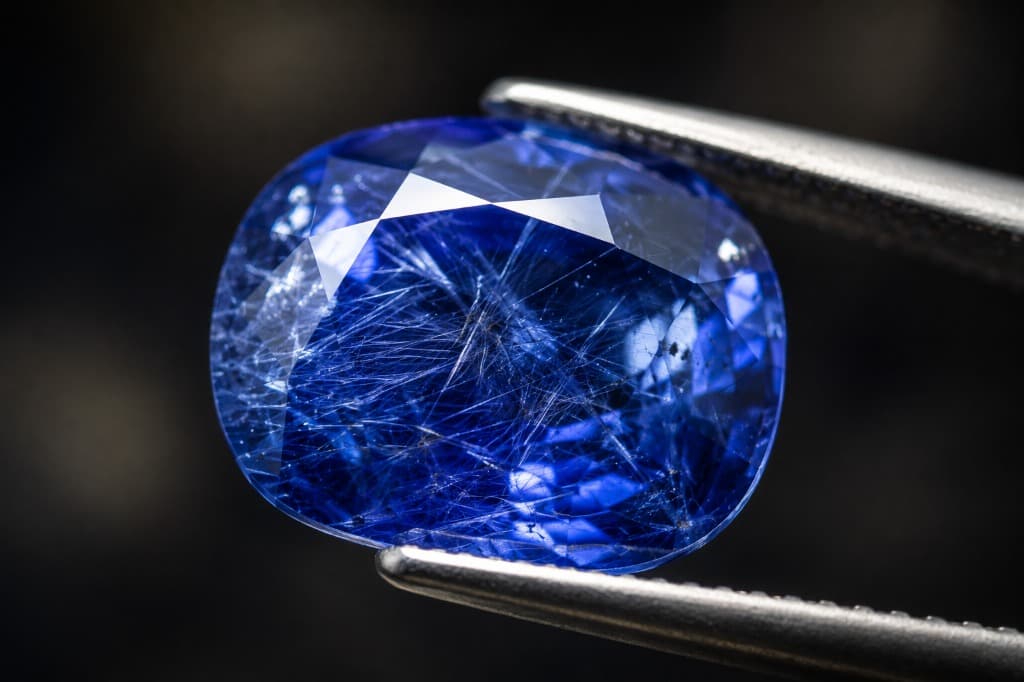
Rutile Silk: Fine rutile needles—often called silk—are among the best-known inclusions in corundum. Their condition assists gemologists investigating treatment history.
Fingerprints & Healed Fractures: Microscopic healed fracture patterns resembling human fingerprints, mineral crystals, and growth structures provide essential internal diagnostic evidence.
*Important Note: While certain inclusion scenes are associated with metamorphic environments, inclusion patterns alone cannot scientifically prove Sri Lankan origin without spectroscopy and trace-element analysis.
Speak with a Gemstone Specialist
Have questions about sapphire inclusions, unheated certification, or selecting a center stone?
Natural, Heated and Unheated Sapphire
Few sapphire topics are more important than thermal treatment. The terminology must be understood correctly.
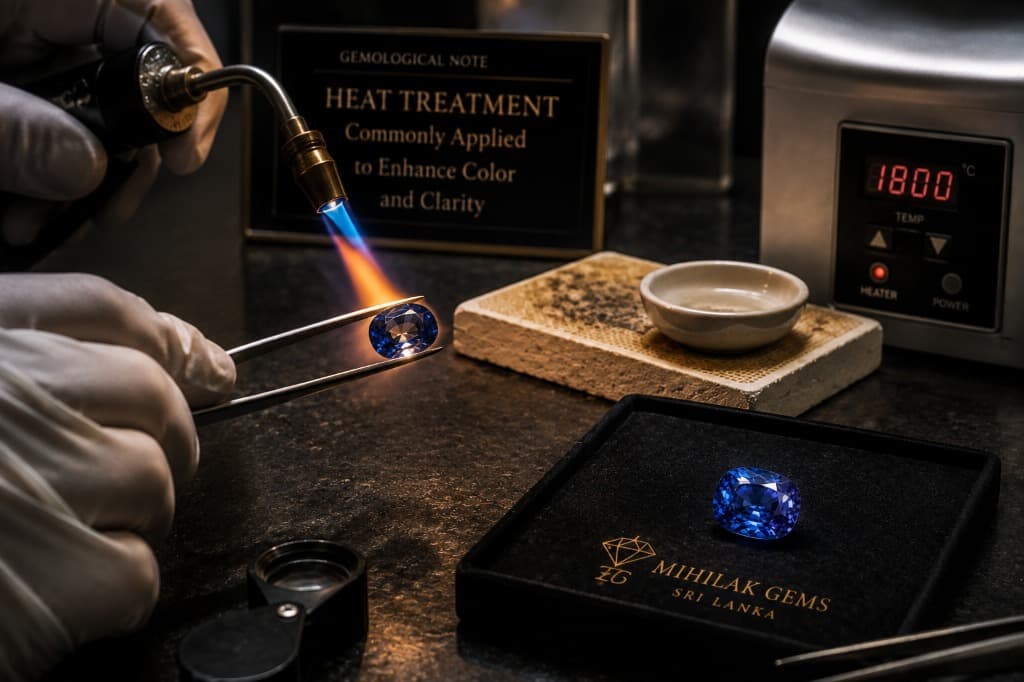
What Does Natural Mean? Natural describes how the sapphire formed inside the Earth. It does not automatically describe treatment status.
What Does Heated Mean? A heated sapphire is a natural sapphire that underwent deliberate post-mining high-temperature thermal treatment to enhance color or clarity. It remains 100% natural, not synthetic.
What Does Unheated Mean? Refers to natural sapphires where laboratory testing confirms no indications of thermal enhancement.
What Is Geuda? A traditional Sri Lankan trade term for milky, silky sapphire rough that responds dramatically to controlled heat treatment.
MIHILAK GEMS Treatment Philosophy
The ethical issue is never heating itself—the ethical issue is undisclosed treatment. A buyer seeking an unheated gem must always receive an unheated stone supported by respected laboratory documentation.
How Is Ceylon Sapphire Origin Determined?
Geographic origin determination is one of the most sophisticated areas of modern gemology. It is never based on a single test. Major laboratories combine evidence from microscopy, spectroscopy (UV-Vis-NIR, FTIR, Raman), and trace-element chemistry (LA-ICP-MS) against documented reference collections.
Because natural geological deposits do not follow modern political borders, sapphires from Sri Lanka, Madagascar, and Myanmar can share overlapping features. Independent laboratory evidence provides scientific support that photographs alone never can.
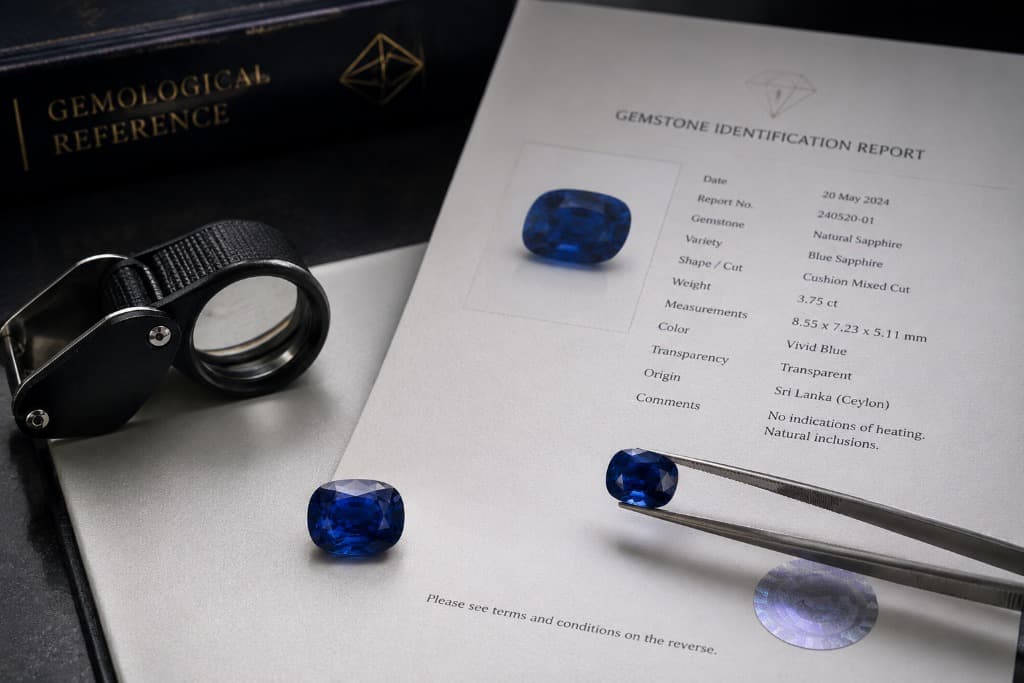
Understanding a Sapphire Laboratory Report
An independent laboratory report is an objective assessment of specific gemological characteristics, not a simple commercial certificate.
What Determines the Value of a Ceylon Sapphire?
There is no universal price-per-carat formula for natural gemstones. Value emerges from the harmony of:
- 1. Color Hue, tone, vivid saturation
- 2. Transparency Light passage and crystal purity
- 3. Clarity Minimal eye-visible inclusions
- 4. Cut & Spread Symmetry and brilliance
- 5. Carat Weight Exponential rarity with size
- 6. Treatment Unheated premium for collectors
Origin Comparison: Ceylon vs Kashmir vs Myanmar vs Madagascar
Four geographic names frequently appear in sapphire discussions. Each has produced notable sapphire material, yet none guarantees universal superiority.
| Origin | General Trade Association | Buyer Perspective |
|---|---|---|
| Sri Lanka (Ceylon) | Historic gem heritage and diverse sapphire colors | Evaluate the individual stone first |
| Kashmir | Historic prestige and celebrated blue material | Origin requires strong laboratory support |
| Myanmar (Burma) | Important historic blue sapphire source | Quality varies considerably between stones |
| Madagascar | Major modern sapphire producer | Some material overlaps visually with other origins |
How MIHILAK GEMS Evaluates a Sapphire
Our 8-step evaluation process combines practical hands-on trade mastery with independent scientific laboratory verification:
Step 1 — Preliminary Observation
Avoiding assumptions based solely on color; tactile and initial visual review.
Step 2 — Color Assessment
Detailed examination of hue, tone, saturation, distribution, and zoning.
Step 3 — Surface Examination
Inspection of polished facets, girdle integrity, and finishing quality.
Step 4 — Internal Characteristics
Microscopic review of inclusions and transparency effect.
Step 5 — Cut Quality
Proportions, symmetry, depth, windowing, and light return.
Step 6 — Luster
Refined surface reflection and optical cleanliness.
Step 7 — Brilliance
Observation of light movement and life across lighting environments.
Step 8 — Independent Laboratory Evidence
Verification of identity, treatment status, and geographic origin.
How to Buy a Ceylon Sapphire With Confidence
Buying a high-value sapphire online requires more than attractive photographs. A responsible buyer should request enough information to understand both the gemstone and the claims being made about it.
The MIHILAK GEMS Transparency Standard
For important gemstones offered remotely, our objective is to provide complete clarity for an informed decision:
Independent laboratory report • Exact weight • Exact millimeter measurements • Treatment disclosure • High-resolution photographs • Multi-lighting views • Detailed 4K video • Origin documentation
“Luxury should not depend on mystery. It should depend on confidence.”
Common Ceylon Sapphire Myths
Frequently Asked Questions
What is a Ceylon sapphire?
A Ceylon sapphire is a natural sapphire associated with geographic origin in Sri Lanka, historically known as Ceylon.
Is Ceylon sapphire the same as Sri Lankan sapphire?
Yes. Both terms are commonly used in reference to sapphires associated with Sri Lankan origin.
Are all Ceylon sapphires blue?
No. Sri Lanka produces blue, pink, yellow, violet, green, white, parti-colored, and Padparadscha-type sapphires.
Are Ceylon sapphires valuable?
Their value depends on color, transparency, clarity, cut, size, treatment, origin evidence, rarity, and overall beauty.
Is a heated sapphire still natural?
Yes. A naturally formed sapphire remains natural after conventional heat treatment, although treatment status should be disclosed.
What is geuda?
Geuda is a traditional Sri Lankan trade term for certain sapphire rough that can respond significantly to controlled heat treatment.
Can I identify Ceylon origin from color?
No. Color alone cannot prove geographic origin.
Can inclusions prove Sri Lankan origin?
Not by themselves. Laboratories use multiple analytical methods when investigating origin.
What does Royal Blue mean?
Royal Blue is a sapphire color description used within the trade and, in some contexts, by laboratories according to defined terminology.
What is Cornflower Blue?
Cornflower Blue generally refers to a lively blue appearance often associated with fine sapphire trade terminology.
Should I buy a sapphire without a laboratory report?
For significant natural sapphires where treatment or origin materially affects the purchase decision, independent laboratory documentation is strongly advisable.
Why do sapphires look different in photos?
Lighting, camera settings, editing, screen calibration, and reflections all influence photographic appearance.
What should I request before buying online?
Ask for a laboratory report, exact measurements, treatment disclosure, high-resolution photographs, video, different-lighting views, and clear transaction information.
Final Thoughts
A fine Ceylon sapphire deserves more than admiration. It deserves understanding.
Behind every polished gemstone is a journey involving geological formation, natural weathering, discovery, cutting, possible treatment, laboratory examination, and finally a buyer choosing to become its next custodian.
Sri Lanka's gemstone heritage gives Ceylon sapphire extraordinary historical significance. Yet origin alone never creates quality. A sapphire should be evaluated for the stone itself: its color, transparency, inclusions, cut, brilliance, treatment history, and the evidence supporting the claims made about it.
At MIHILAK GEMS, our philosophy remains simple: Observe carefully. Document accurately. Disclose transparently. We believe trust should be built by information—not pressure. When purchasing a natural gemstone, confidence comes from understanding exactly what you are buying.
Explore Natural Ceylon Sapphires
Discover carefully selected natural Ceylon sapphires from Sri Lanka with detailed photographs, gemstone videos, exact measurements, treatment disclosure, and independent laboratory documentation where applicable.
MIHILAK GEMS • Observe carefully. Document accurately. Disclose transparently.