
Heated vs. Unheated Sapphire: The Definitive Gemological Guide
Few topics in gemology create as much fascination—and value distinction—as whether a natural Ceylon sapphire has undergone thermal enhancement. Here is the authoritative guide to rarity, microscopic proof, value factors, and laboratory certificate wording.
Executive Key Takeaways
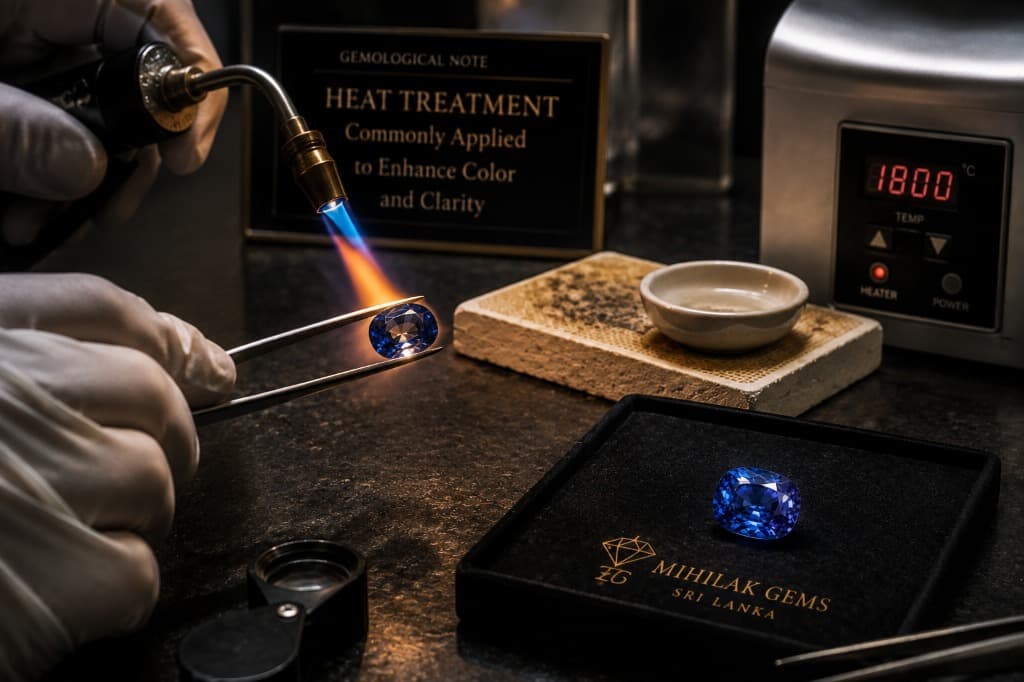
- Both are 100% natural earth-mined stones: Heat treatment is an accepted traditional physical enhancement that stabilizes natural crystal color centers without introducing foreign dyes or glass.
- Natural Scarcity: Only a select fraction of all mined corundum possesses the exceptional inherent saturation and transparency to remain completely unheated.
- Collector Value Premium: Fine unheated sapphires command a substantial price premium over comparable heated stones, driven by natural scarcity and global collector demand.
- Independent Certification: Always look for "No Indications of Thermal Enhancement (NTE)" on official NGJA, GIA, or GRS reports.
1. What Is Traditional Sapphire Heat Treatment?
For centuries, Sri Lankan master burners in Ratnapura have utilized traditional thermal methods (historically known as the Lakada blowpipe technique, modernly electric precision muffles) to heat rough corundum between 1,200°C and 1,800°C.
This process accomplishes two natural physical transformations:
Microscopic needle-like inclusions of rutile (titanium dioxide, TiO₂) dissolve into the crystal lattice at high temperatures, enhancing internal transparency and light transmission.
The liberated titanium ions (Ti⁴⁺) pair with native iron ions (Fe²⁺) within the corundum structure, activating natural charge transfer that enriches deep blue hue saturation.
2. Side-by-Side Comparison: Heated vs. Unheated
| Characteristic | Unheated Natural Sapphire | Traditionally Heated Sapphire |
|---|---|---|
| Geological State | 100% Untouched As Mined | 100% Earth-Mined, Thermally Enhanced |
| Natural Scarcity | Exceptional Geological Scarcity | Widely Available in Fine Jewelry |
| Value Premium | Substantial Collector Premium | High Value-to-Size Ratio |
| Microscopic Inclusions | Intact sharp rutile silk needles, unheated crystals | Pitted silk, discoid thermal tension halos |
| NGJA Report Wording | No Indication of Heating (NTE) | Indication of Thermal Enhancement (TE) |
| Target Connoisseur | Collectors, Connoisseurs, Heirloom Acquisitions | Fine Jewelry Settings, Milestone Occasions |
3. How Independent Gem Labs Prove Unheated Status
Determining whether a stone is unheated requires advanced gemological equipment and decades of specialized diagnostic experience:
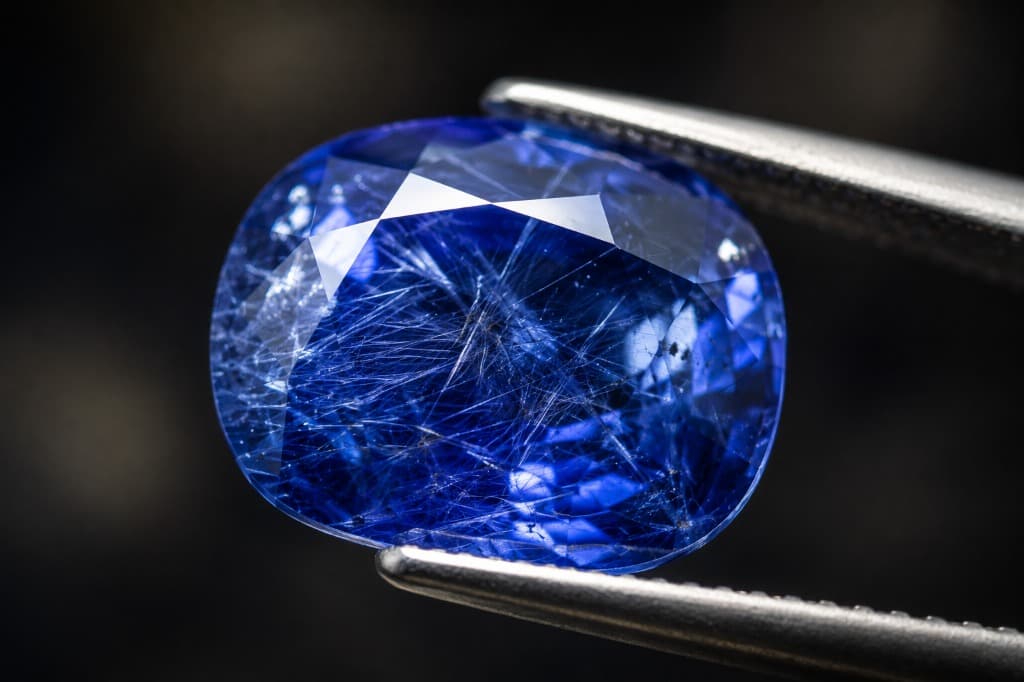
Unheated sapphires feature sharp, iridescent, unruptured intersecting rutile needles (silk). Heated sapphires display broken, dotted "strings of pearls" or completely melted diffuse clouds.
Natural zircon, apatite, and spinel crystals expand at different thermal rates than corundum. Under heat, they develop glassy circular disc fractures ("discoids" or "snowflakes").
Fourier-Transform Infrared Spectroscopy detects characteristic hydroxyl (OH) absorption bands (such as the 3309 cm⁻¹ series), confirming unheated crystal growth chemistry.
Frequently Asked Questions
Should I buy a heated or unheated sapphire?
If your priority is pure historical rarity, long-term collector value, and natural untouched geological beauty, an unheated Ceylon sapphire is the gold standard. If your priority is maximum visual size and color saturation for a given budget, a traditionally heated sapphire offers exceptional value with identical physical durability.
Does heat treatment affect the durability or Mohs hardness of the sapphire?
No. Standard high-temperature heat treatment does not weaken the stone. Both heated and unheated sapphires maintain a Mohs hardness of 9, making them among the most scratch-resistant precious gems in existence.
What other treatments should I avoid?
While traditional heat is universally accepted, you should avoid non-permanent or synthetic enhancements like Beryllium diffusion (which artificially induces orange/yellow coloration into outer layers), Lead-glass filling (which masks fractures with glass), and oil/dye impregnation. Mihilak Gems strictly forbids all such non-traditional treatments.
Explore Natural Ceylon Sapphires
Discover carefully selected natural Ceylon sapphires from Sri Lanka with detailed photographs, gemstone videos, exact measurements, treatment disclosure, and independent laboratory documentation where applicable.
MIHILAK GEMS • Observe carefully. Document accurately. Disclose transparently.