
Royal Blue vs Cornflower Blue Sapphire: What’s the Difference?
Royal Blue and Cornflower Blue are two of the most admired color descriptions in the sapphire trade. Both can describe exceptionally beautiful blue sapphires, including stones from Sri Lanka, but they create distinctly different visual impressions.
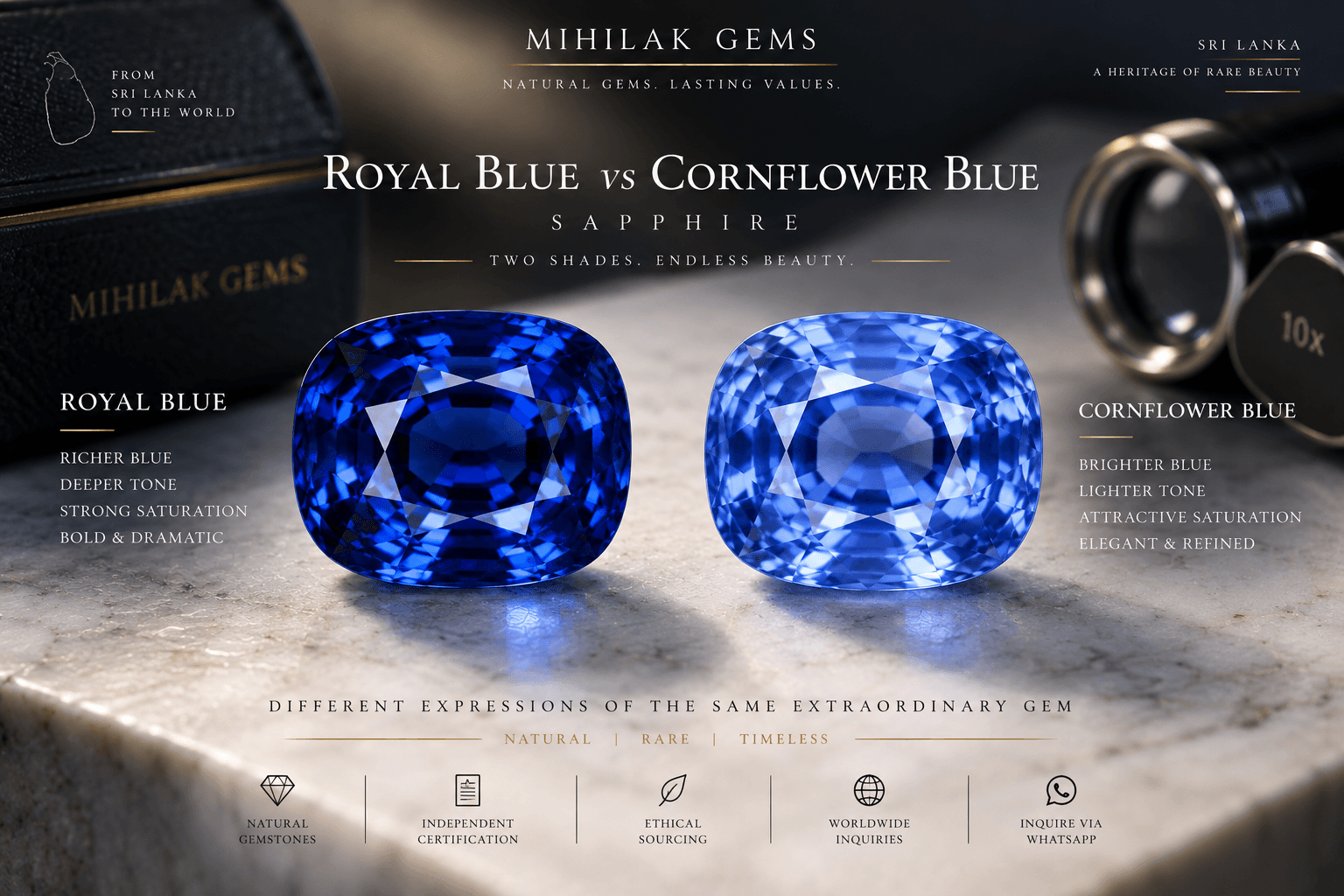
Royal Blue is generally associated with a richer, deeper and strongly saturated blue appearance. Cornflower Blue is typically used for a somewhat lighter, brighter blue with a softer visual character.
But these names should not be treated as simple grades.
A sapphire does not become superior merely because a seller calls it “Royal Blue” or “Cornflower Blue.” Its beauty, rarity and value depend on the individual stone—its hue, tone, saturation, color distribution, clarity, cut, carat weight, treatment status, origin documentation and overall appearance.
For buyers of fine Ceylon sapphires, understanding the difference between a trade color name and the actual quality of a gemstone is essential.
Quick Answer: Royal Blue vs Cornflower Blue
The simplest distinction is visual:
Royal Blue Sapphire
- Richer and generally deeper blue appearance
- Strong to vivid saturation
- Dramatic, luxurious visual character
- •Can lose brightness if the stone becomes excessively dark
Cornflower Blue Sapphire
- Generally lighter or softer blue appearance
- Often perceived as bright and lively
- Elegant, open visual character
- •Should still possess attractive saturation rather than appearing pale or washed out
Neither description automatically means that one sapphire is better than the other.
A beautiful Cornflower Blue sapphire can be more desirable than a poorly proportioned or overly dark stone sold as Royal Blue—and the reverse can also be true.
The individual gemstone matters more than the label.
What Is a Royal Blue Sapphire?
“Royal Blue” is a trade color description associated with richly saturated blue sapphires.
A fine example should display a strong blue appearance while retaining enough brightness for the color to remain alive rather than becoming blackish or excessively dark.
This distinction is important. In blue sapphire, darker does not automatically mean better.
Gemological Institute of America (GIA) guidance notes that highly valued blue sapphires typically show strong to vivid saturation within medium to medium-dark tones. If the tone becomes too dark, brightness can be compromised.
A successful Royal Blue sapphire therefore balances depth, saturation and brightness. The visual impression is often bold, intense and luxurious.
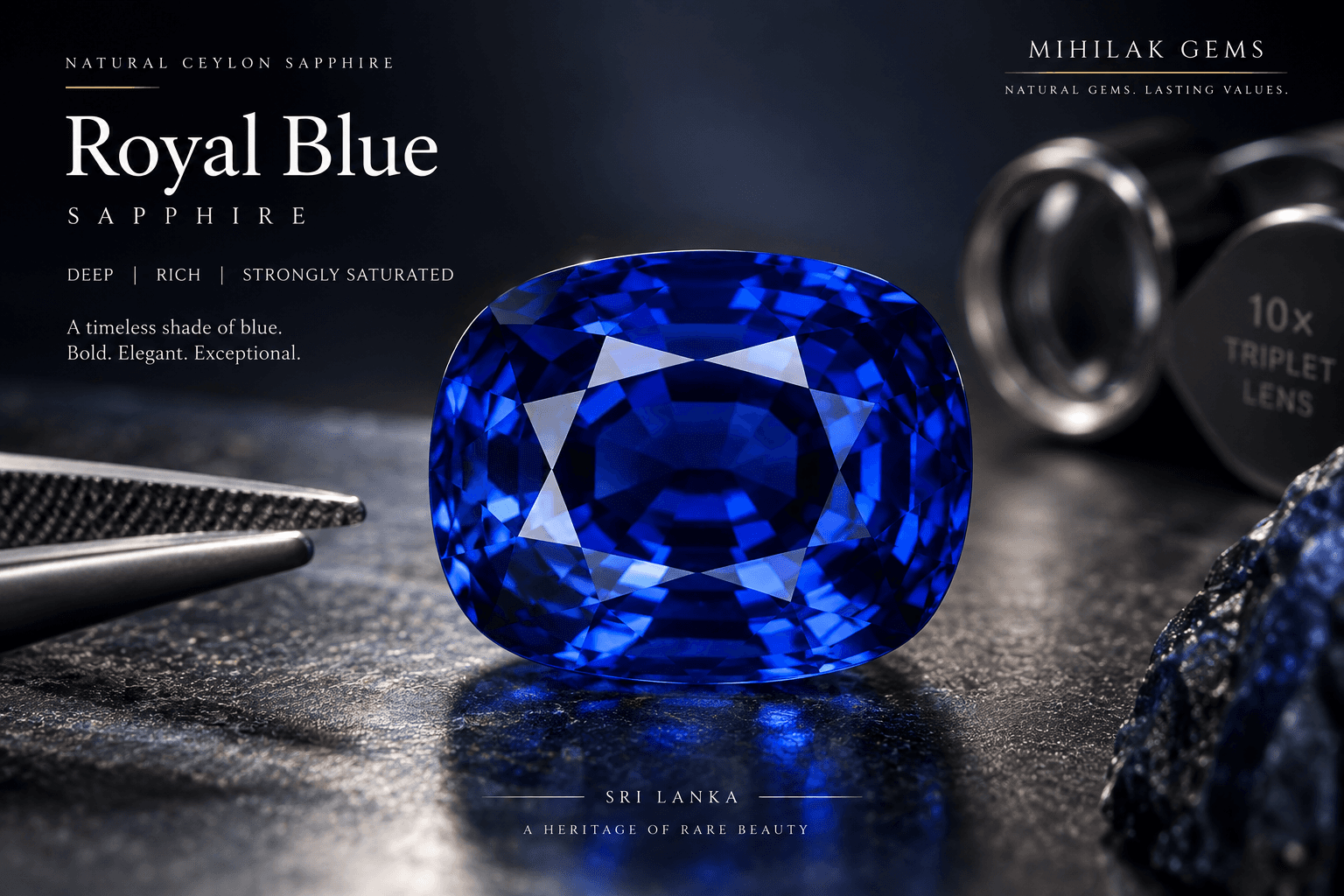
Royal Blue should not simply mean “dark blue”
A sapphire that appears almost black in normal lighting may possess a deep blue body color, but darkness alone does not create fine Royal Blue quality. When evaluating a stone, buyers should look beyond the name and examine how much blue color remains visible across the face of the gemstone.
What Is a Cornflower Blue Sapphire?
Cornflower Blue is another traditional trade description used for attractive blue sapphires.
Compared with Royal Blue, Cornflower Blue is generally associated with a somewhat lighter, softer and more open blue appearance.
Fine examples can combine noticeable saturation with excellent brightness, creating a blue that feels vivid without appearing overly dark.
The description is often associated with a graceful, elegant visual character.
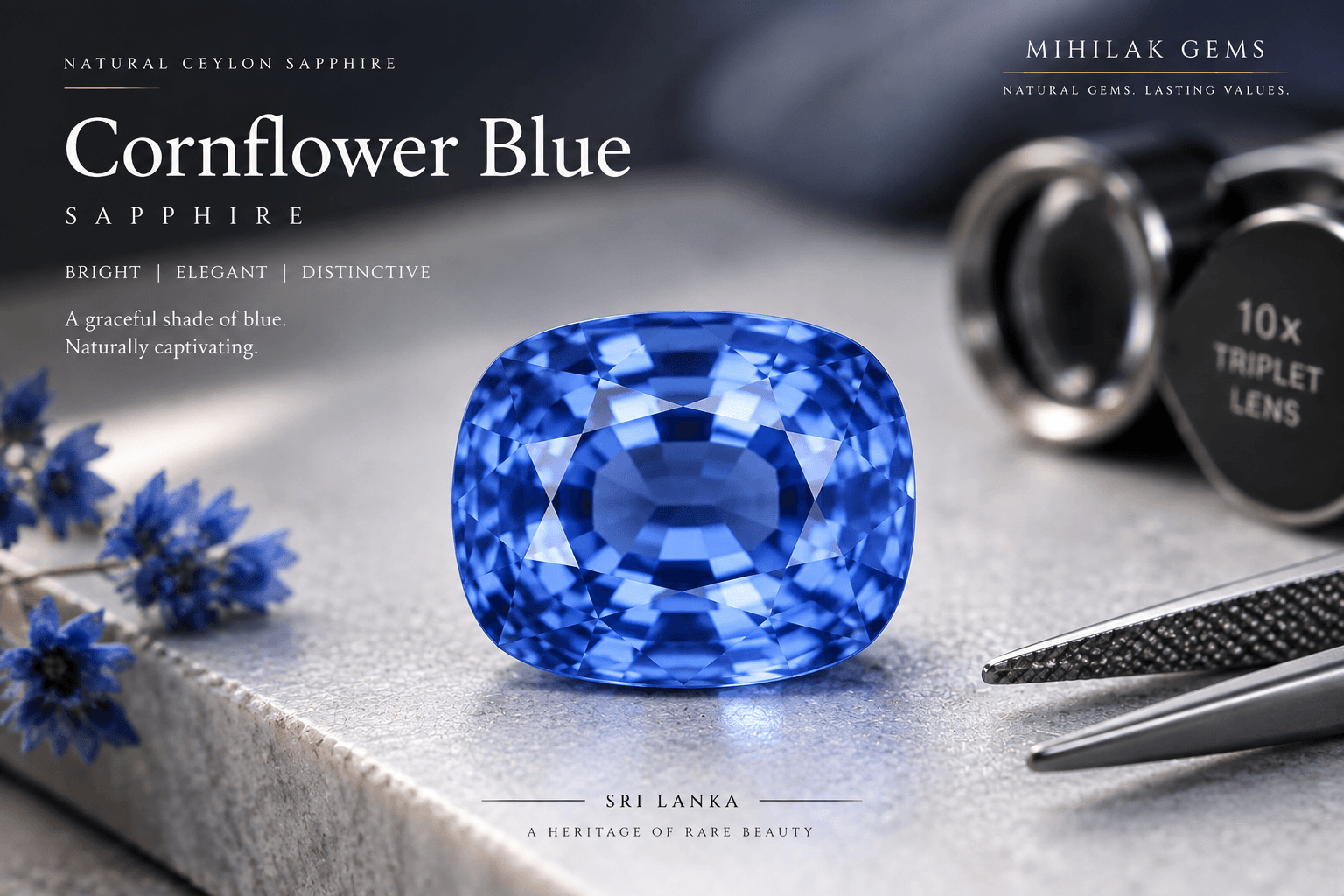
However, Cornflower Blue should not be confused with simply pale blue. A weakly saturated sapphire may look light, but that alone does not make it a fine Cornflower Blue stone.
As with Royal Blue, the entire appearance must be considered.
Royal Blue vs Cornflower Blue: Side-by-Side
To help you compare the two color profiles at a glance, here is a breakdown of their primary visual and gemological distinctions:
| Characteristic | Royal Blue | Cornflower Blue |
|---|---|---|
| General appearance | Rich, deep blue | Brighter, softer blue |
| Typical visual tone | Deeper | Generally lighter |
| Saturation | Strong to vivid | Attractive saturation with brightness |
| Character | Bold and dramatic | Open and elegant |
| Potential concern | Excessive darkness | Insufficient saturation |
| Best choice | Depends on the individual stone | Depends on the individual stone |
These descriptions are useful for communicating color, but they should never replace direct examination, high-quality photography/video and independent laboratory documentation where appropriate.
Understanding Sapphire Color: Hue, Tone and Saturation
To understand why two blue sapphires can look dramatically different, it helps to separate color into three basic components recognized by international gemological standards:
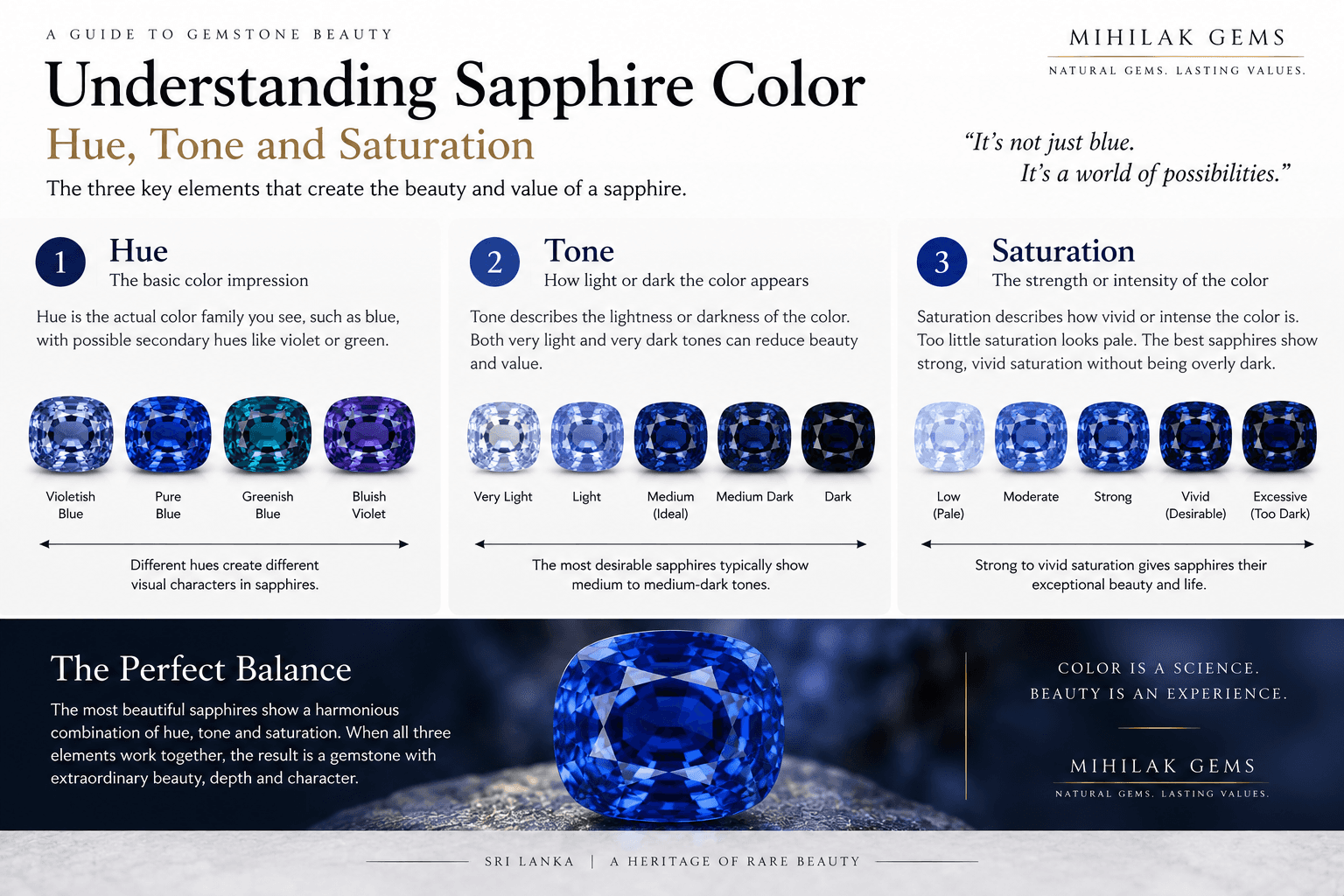
Hue is the basic color impression. In fine blue sapphire, the dominant hue is blue, although secondary violet or greenish hues may sometimes be visible.
Tone describes how light or dark the color appears. A sapphire with very light tone may lack depth, while an excessively dark tone can lose brightness and appear nearly black.
Saturation describes the strength or intensity of color. Fine blue sapphires are generally valued for strong to vivid saturation without excessive darkness.
This relationship explains why choosing a sapphire purely by a color name can be misleading. Two stones both marketed as “Royal Blue” can differ significantly in tone, saturation, brightness and overall beauty.
Why Lighting Changes the Appearance of a Blue Sapphire
A sapphire should never be judged from a single photograph or under only one type of lighting. Its appearance can change depending on:
A sapphire that appears bright blue under strong studio lighting may look considerably darker in normal indoor conditions. This is one reason responsible online presentation matters.
For important purchases, buyers should ideally examine accurate photographs and video under more than one realistic lighting condition rather than relying only on heavily illuminated or digitally enhanced imagery.
At Mihilak Gems, our goal is to present natural gemstones as accurately and transparently as practical so buyers can understand the character of the individual stone before making an inquiry.
Does Ceylon Origin Determine Whether a Sapphire Is Royal Blue or Cornflower Blue?
No.
Sri Lanka—historically known as Ceylon—is one of the world’s important sources of fine sapphire, but geographic origin alone does not determine whether an individual stone should be described as Royal Blue or Cornflower Blue.
A mining region can produce gemstones across a range of qualities and colors. Origin and color should therefore be considered separately.
A sapphire described as Ceylon should have appropriate supporting evidence when origin is material to the sale, particularly for high-value gemstones.
Geographic origin determination is a specialized laboratory process. Gemologists evaluate internal features, trace-element chemistry and other evidence, and characteristics can overlap between deposits from different countries. An inclusion or visual appearance alone should therefore not be treated as definitive proof of Sri Lankan origin.
Heated vs Unheated Royal and Cornflower Blue Sapphires
Both Royal Blue and Cornflower Blue sapphires may be heated or unheated.
Heat treatment has a long history in the sapphire trade and may be used to improve color and/or clarity. Treatment status and color description are therefore different questions:
What does the sapphire look like visually?
Has its appearance been modified by detectable thermal enhancement?
An attractive Royal Blue sapphire can be heated or unheated. The same is true for a Cornflower Blue sapphire.
For fine-quality stones, documented absence of heat treatment can contribute to rarity and may influence market value, but it does not automatically make every unheated sapphire more beautiful than every heated sapphire. The quality of the individual stone still matters.
Want to learn more about sapphire heating?
Explore our in-depth gemological analysis of thermal treatment, microscopic silk testing, and price differentials.
Clarity and Natural Inclusions
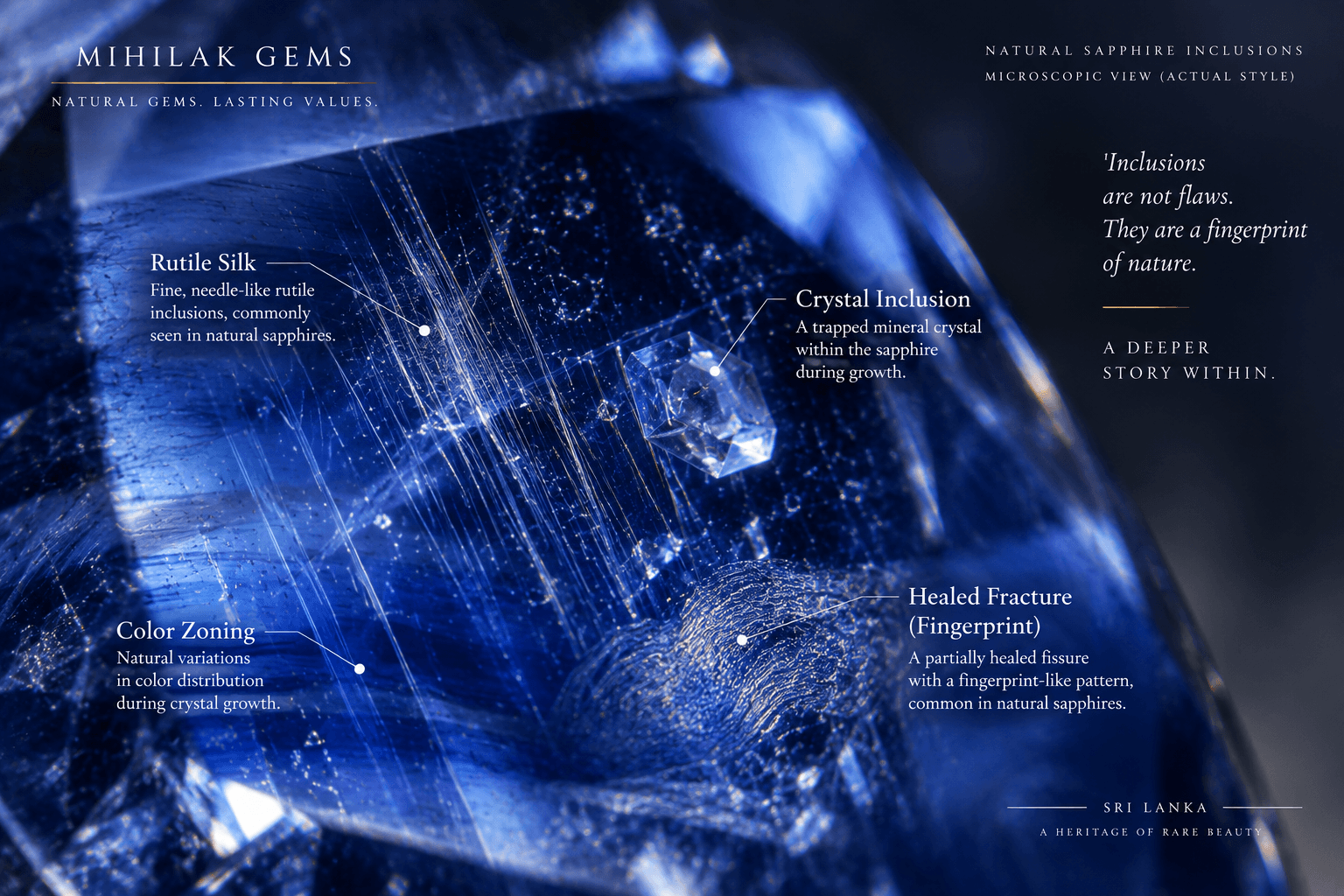
Natural sapphires frequently contain internal characteristics formed deep within the earth over hundreds of millions of years. Examples can include:
- Rutile silk: Fine needle-like crystal inclusions of titanium dioxide.
- Mineral crystals: Zircon, apatite, spinel, or mica crystals trapped during crystal growth.
- Healed fissures: Liquid or two-phase inclusions arranged in fingerprint-like formations.
- Color zoning: Natural hexagonal bands of alternating color density.
- Growth-related features: Angular twinning planes and stress patterns.
These characteristics can provide gemologists with useful information. However, buyers should be careful with statements such as:
“This inclusion proves the sapphire is from Sri Lanka.”
Origin determination is much more complex. For example, certain rutile silk characteristics can support an origin interpretation, but similar internal features can overlap among sapphires from multiple geographic sources. Professional laboratories combine multiple lines of evidence before issuing an origin opinion. Inclusions may also provide evidence relevant to treatment detection.
Cut Can Change How You Perceive Color
Color does not exist independently of cut. A well-cut sapphire manages light effectively and presents its color attractively across the face of the gemstone.
Lapidaries and master cutters working with sapphire must consider several factors:
An excessively deep cut may retain carat weight but can sometimes contribute to a darker face-up appearance. Poor proportions may also create areas that appear lifeless or poorly illuminated (“windowing” or “extinction”).
Therefore, when comparing two sapphires with similar color descriptions, examine the complete face-up appearance rather than comparing labels or carat weights alone.
Is Royal Blue Rarer Than Cornflower Blue?
There is no reliable universal rule that every Royal Blue sapphire is rarer than every Cornflower Blue sapphire, or vice versa.
Rarity depends on the specific combination of characteristics present in an individual gemstone, including:
A large, beautifully saturated, transparent, unheated sapphire with respected laboratory documentation may be exceptionally rare regardless of whether its appearance is described commercially as Royal Blue or Cornflower Blue.
Which Is More Valuable?
There is no fixed price relationship based solely on these two color names. Color is one of the most important factors in sapphire quality, but value is influenced by the interaction of multiple characteristics.
Hue, tone, saturation and evenness of color across the gemstone.
The nature, position and visibility of inclusions and their effect on appearance or durability.
Symmetry, facet alignment, light return and how effectively the cut displays the sapphire's color.
Larger fine-quality sapphires become exponentially rarer, but carat weight alone does not establish quality.
Treatment type and documented treatment status materially affect desirability and collector value.
Independent reports provide essential verification regarding identity, treatments and geographic origin.
Therefore: Do not buy a sapphire simply because the listing says “Royal Blue,” and do not dismiss a beautiful sapphire simply because it is described as Cornflower Blue. Evaluate the stone.
Royal Blue vs Cornflower Blue: Which Should You Buy?
The answer depends on what you personally value in a sapphire:
You prefer a deep, intense, bold and dramatic appearance with velvety richness and high-contrast color depth.
You prefer a brighter, softer, more open blue with vibrant daytime illumination and graceful elegance.
Choose the individual sapphire, not the color name alone.
Before making any acquisition, ask these key evaluation questions:
Why an Independent Laboratory Report Matters
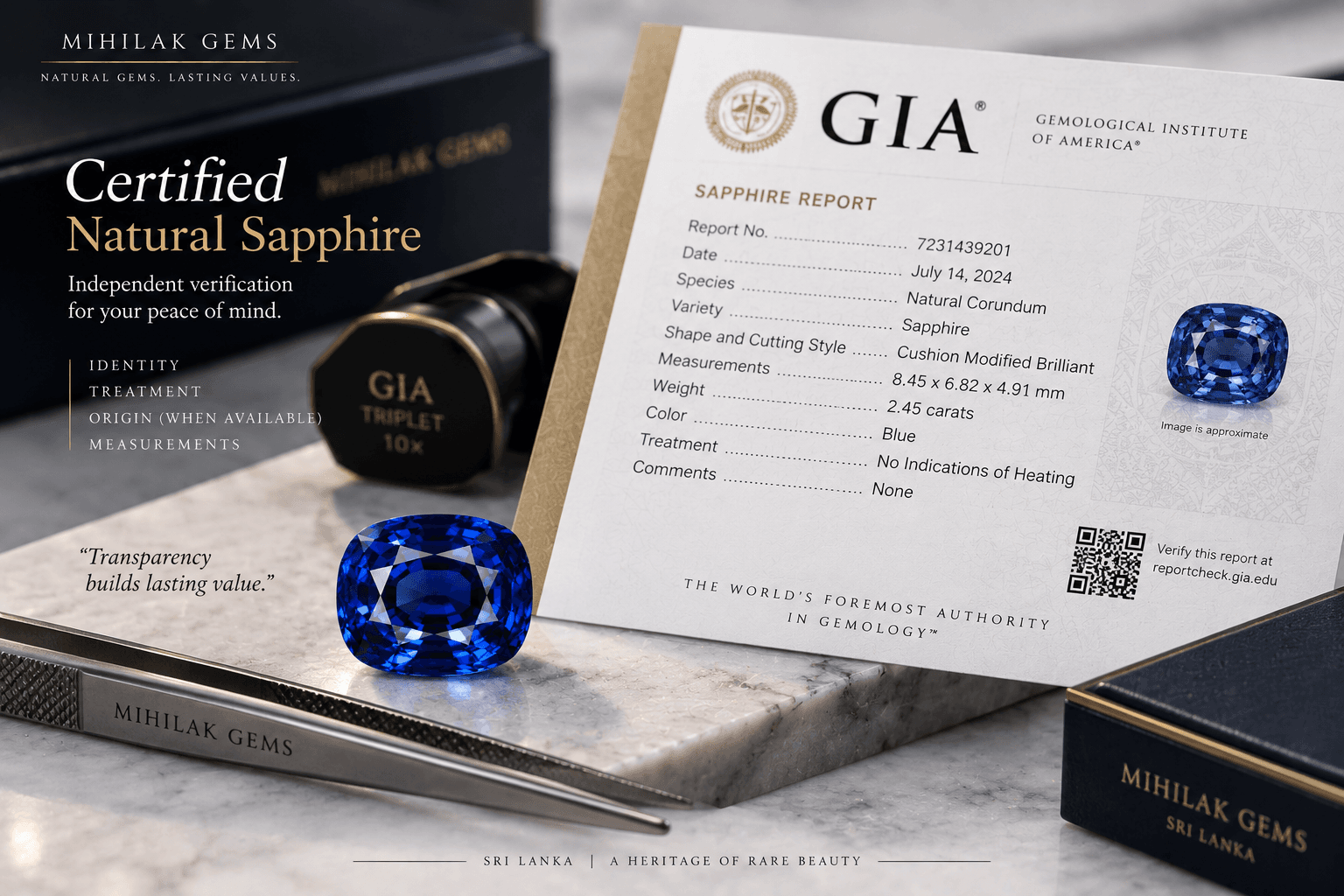
For significant sapphire purchases, independent laboratory documentation can reduce uncertainty. A gemological report may provide information such as:
Understanding what a laboratory report does not provide
GIA does not issue a diamond-style quality grade for sapphire. Its colored-stone reports identify and describe the material and can provide treatment and origin information according to the report service.
Buyers should therefore read the actual report rather than treating the presence of a certificate as a universal quality grade. At Mihilak Gems, our focus is on natural gemstones supported by independent laboratory documentation from respected authorities like NGJA, GIA, and GRS.
A Note About Trade Color Names
Terms such as Royal Blue and Cornflower Blue are widely used in the international gemstone trade, but buyers should understand that trade terminology can be applied differently by sellers and laboratories.
A seller's color description should not automatically be interpreted as an independent laboratory conclusion.
When a laboratory report uses a specific trade-color designation (such as GRS Royal Blue or SSEF Royal Blue), the terminology should be understood according to that laboratory's own strict color boundary criteria.
This distinction is especially important when comparing gemstones online.
Frequently Asked Questions
Q1.Is Royal Blue sapphire better than Cornflower Blue sapphire?
Not automatically. Both can represent exceptional sapphires. Quality depends on the individual stone’s color, clarity, cut, treatment, size, documentation and overall appearance.
Q2.Is Royal Blue always darker than Cornflower Blue?
Royal Blue is generally associated with a deeper visual appearance, while Cornflower Blue is usually perceived as lighter or softer. However, trade descriptions are not perfectly standardized across every seller.
Q3.Are all Ceylon sapphires Cornflower Blue?
No. Sri Lanka produces sapphires across a broad range of colors and appearances. Geographic origin does not automatically determine a specific trade-color description.
Q4.Can an unheated sapphire be Royal Blue?
Yes. An unheated sapphire can naturally display rich blue color. Royal Blue and treatment status describe different characteristics.
Q5.Can a heated sapphire be valuable?
Yes. Heat treatment is an established practice in the sapphire market. Quality, treatment type, color, size, origin and other characteristics all influence value. Fine unheated stones can command premiums because of their rarity.
Q6.Can inclusions prove that a sapphire comes from Sri Lanka?
Not by themselves in most cases. Inclusions can provide valuable evidence, but professional geographic-origin determination typically considers multiple gemological and analytical characteristics.
Q7.Does GIA grade sapphire quality?
GIA identifies and describes colored stones but does not give sapphires the type of overall quality grade used for diamonds.
Q8.Which sapphire color should I choose?
Choose the sapphire whose individual appearance appeals to you, while considering treatment, cut, clarity, documentation and value—not simply the color name used in the listing.
References & Further Reading
- Gemological Institute of America (GIA) — Sapphire Quality Factors & Hue/Tone/Saturation Scale
- National Gem & Jewellery Authority (NGJA) Sri Lanka — Ceylon Sapphire Characterization
- Gübelin Gem Lab & SSEF — Gemmological Standards for Trade Color Descriptions
Available Natural Ceylon Sapphires


Related Sapphire Guides
Ceylon Sapphire: The Complete Guide to Sri Lanka's Finest Sapphires
An in-depth guide to Sri Lankan sapphire origin, colors, treatments, inclusions, laboratory reports, value and confident buying.
Heated vs Unheated Sapphire: The Definitive Gemological Guide
Detailed gemological comparison between unheated and traditionally heated Ceylon sapphires, microscopy tests, and pricing benchmarks.
Looking for a Specific Ceylon Sapphire?
Explore our available natural Ceylon sapphires or contact Mihilak Gems for current availability, private concierge viewings, and bespoke sourcing direct from Sri Lanka.